
Austin, Texas · grid square EM10
Get on the air in Central Texas
Amateur radio is alive and well in Austin, a thicket of hilltop repeaters, a weekly calendar of on-air nets, clubs that still Elmer newcomers, and operators who keep talking when the cell network quits. Here's a plain, friendly guide to joining them.
Why bother in 2026
A hobby that still earns its antenna
Everyone has a phone, so why learn radio? Because when you key up a repeater on a Hill Country ridgeline, your signal reaches dozens of counties with no carrier, no account, and no monthly bill, and because the people on the other end are some of the most generous tinkerers you'll meet. Austin's amateur scene runs from teenagers chasing satellites to retired engineers restoring tube rigs, and the door in is wider and cheaper than most newcomers expect.
No carrier needed everWorks in a blackout by designA license for lifeGear from $30 up
This site is an enthusiast's field guide, not a database. For live frequency listings we point you at the people who maintain them; what we add is the context a newcomer actually needs to get started and stay on the air.
The lay of the band
The Austin repeater scene
2 meters, the home band
The 144–148 MHz band carries most of Austin's daily chatter. Two long-running machines anchor it: 146.940 (W5KA, the Austin Amateur Radio Club, −600 kHz offset, PL 107.2) and 147.360 (KE5RCS, +600, PL 103.5), the latter tied into systems that reach well beyond the county. Program those two first and you'll rarely find the band quiet.
70 centimeters & digital
The 440 MHz band is roomier, punches through buildings, and carries most of the area's digital voice — D-STAR, DMR and System Fusion repeaters have multiplied around town. A dual-band radio covering 2m and 70cm is the practical first purchase; linking lets a local machine put you in a net on the far side of the planet.
Where the lists live
Repeaters move, retune and go offline, so we don't freeze a stale table here. The current coordinated listings for the region are kept by RepeaterBook and the Texas VHF-FM Society; cross-check both, then confirm on the air before you count on a machine.
Your ticket
Getting licensed is easier than you think
You need an FCC license to transmit, and the entry-level Technician class is a 35-question multiple-choice exam most people pass after a week or two with the free question pool on HamStudy.org. The Austin Amateur Radio Club and Williamson County ARC run volunteer exam sessions around the metro; the exam fee is about $15. Pass it, wait for your call sign to hit the FCC database, program a handheld, and you're legal on every Austin repeater above.
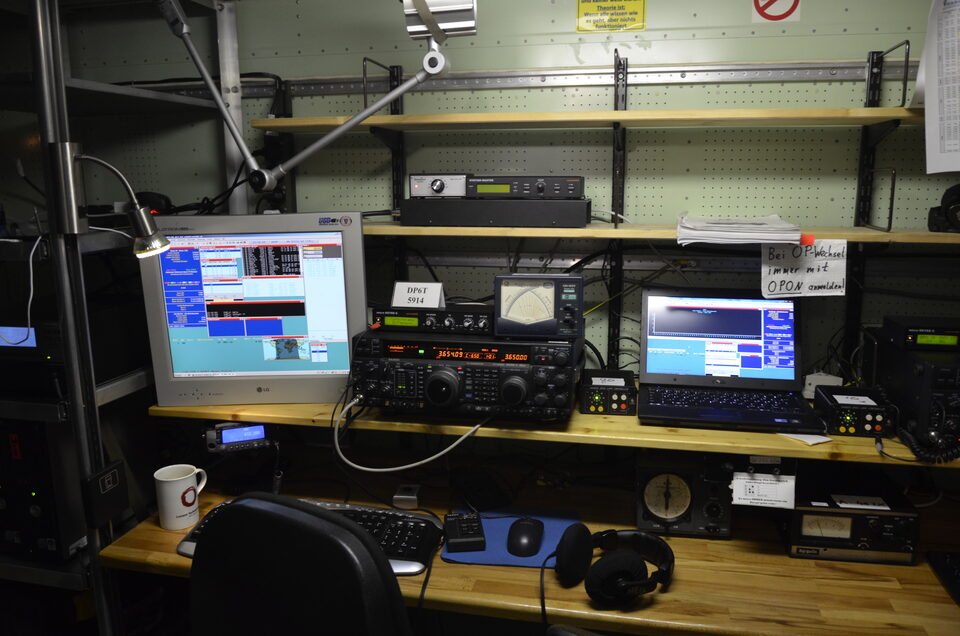
You're not alone out there
Clubs, Elmers and the weekly nets
The fastest way past the awkward first transmission is a net — a scheduled on-air meeting where net control calls for check-ins one at a time, so you always know when it's your turn. Austin's clubs run ragchew, traffic, new-ham and emergency nets across the week on the repeaters above. Find a current schedule through the clubs and the ARRL net directory, listen to a full net first, then check in. An Elmer — ham slang for a patient mentor, will walk you through the rest.

When the grid goes down
The part that actually matters in a crisis
Central Texas gets ice storms, flash floods and the occasional grid failure. A charged handheld and a programmed repeater keep working when nothing else does, which is why Austin's hams train for it year-round.
Emergency service
Travis County ARES and RACES organize licensed volunteers to pass welfare and logistics traffic for served agencies when the usual channels fail.
Severe-weather spotting
Trained spotters report hail, rotation and flooding straight to the National Weather Service over the air. Free classes run each spring; a Technician license is enough to take part.
Be set before the storm
Keep an HT charged, a spare battery on the shelf, the local repeaters programmed and tested, and the weekly net procedures second nature. Winlink passes email over radio when the internet is gone.
From the bench
Keep reading around the site
We track the hobby so a newcomer doesn't have to piece it together from scattered forums. A few places to go next:
Amateur radio news
Auto-updating headlines from across the hobby, refreshed from the news wire.
Hand-picked videos
A curated shelf of ham-radio explainers and builds worth your time, operation, etiquette and antenna projects.
Reference directory
An annotated directory of amateur-radio organizations, references, communities and tools, from the ARRL to APRS.fi.

73 and welcome
Pick a frequency and listen
You don't need a license to listen. Program 146.940, tune in a net, and you'll understand the pull of this hobby faster than any page can explain it. When you're ready to talk back, we'll help you get there.